The two fountains in Trafalgar Square in London commemorate Admirals Jellycoe and Beatty, both senior Royal Navy commanders during the First World War and important figures in British naval history.
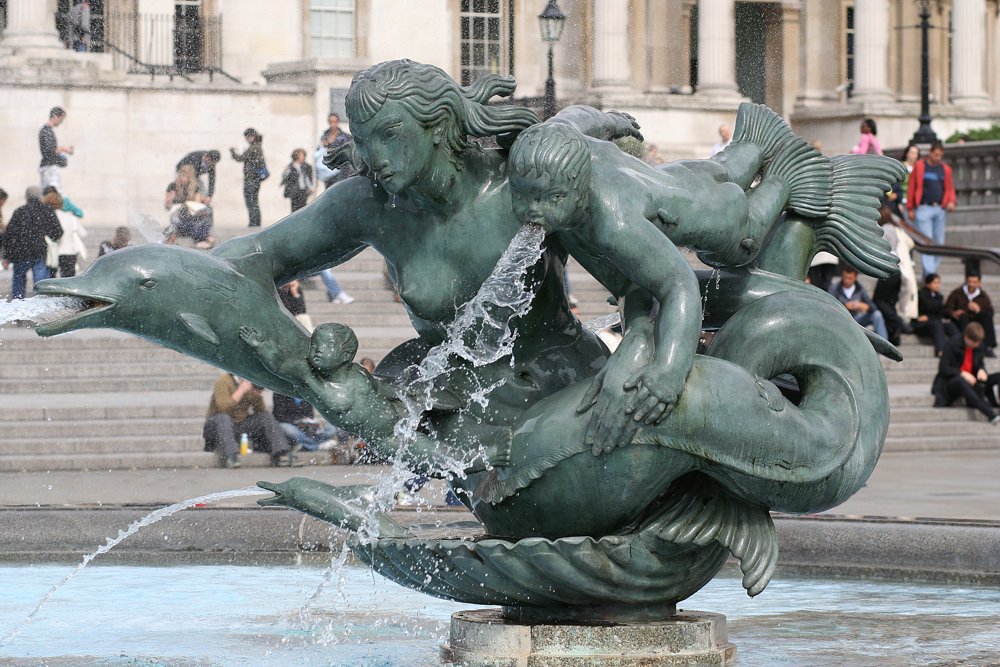
The memorial fountains were intended to honor Britain’s naval strength and maritime tradition. and include elaborate sculptures of mermaids, mermen, tritons, dolphins and other sea creatures intended to reinforce the naval and maritime symbolism associated with Trafalgar Square.. map
The sculptures were created by William McMillan and Sir Charles Wheeler (later the President of the Royal Academy) for the fountains designed by Sir Edwin Lutyens in 1935. Although the two sculptors worked within the same overall theme, their styles differ noticeably. Wheeler’s figures are more classical and idealised, while McMillan’s sculptures tend to appear more energetic and naturalistic.

The fountains were originally created in 1845, but without the sculptures. At the time the fountains were intended to simply take up space in Trafalgar Square, so that there would be less space available for demonstrators and rioters.
Lutyens redesigned the fountains as larger architectural memorials after the earlier Victorian fountains proved too small for Trafalgar Square and difficult to maintain. The new fountains were intended to complement the scale and symmetry of the square.
In 1935 plans were approved by parliament to add memorials to these fountains, and also these sea-creature sculptures by McMillan and Wheeler. The bronze statues were completed in 1939, but due to the war all work on Trafalgar Square was suspended at that time.
Work on this did not resume until after the war in 1947. The finished memorials and the fountains were officially unveiled in October 1948 by King George VI.
The mermaid statues do not have the traditional single tail, but instead have long and powerful tails as an extension of each thigh. The split-tail design resembles medieval melusine-style mermaids found in European art and architecture, making the Trafalgar Square figures somewhat unusual examples of this older mermaid tradition in modern public sculpture.
Today the mermaid sculptures are among the most photographed details in Trafalgar Square and remain distinctive examples of maritime-themed public art in central London.
References:
● http://en.wikipedia.org/wiki/Trafalgar_Square
● http://yourarchives.nationalarchives.gov.uk/index.php?title=McMillan,_William_(1887-1977),_sculptor
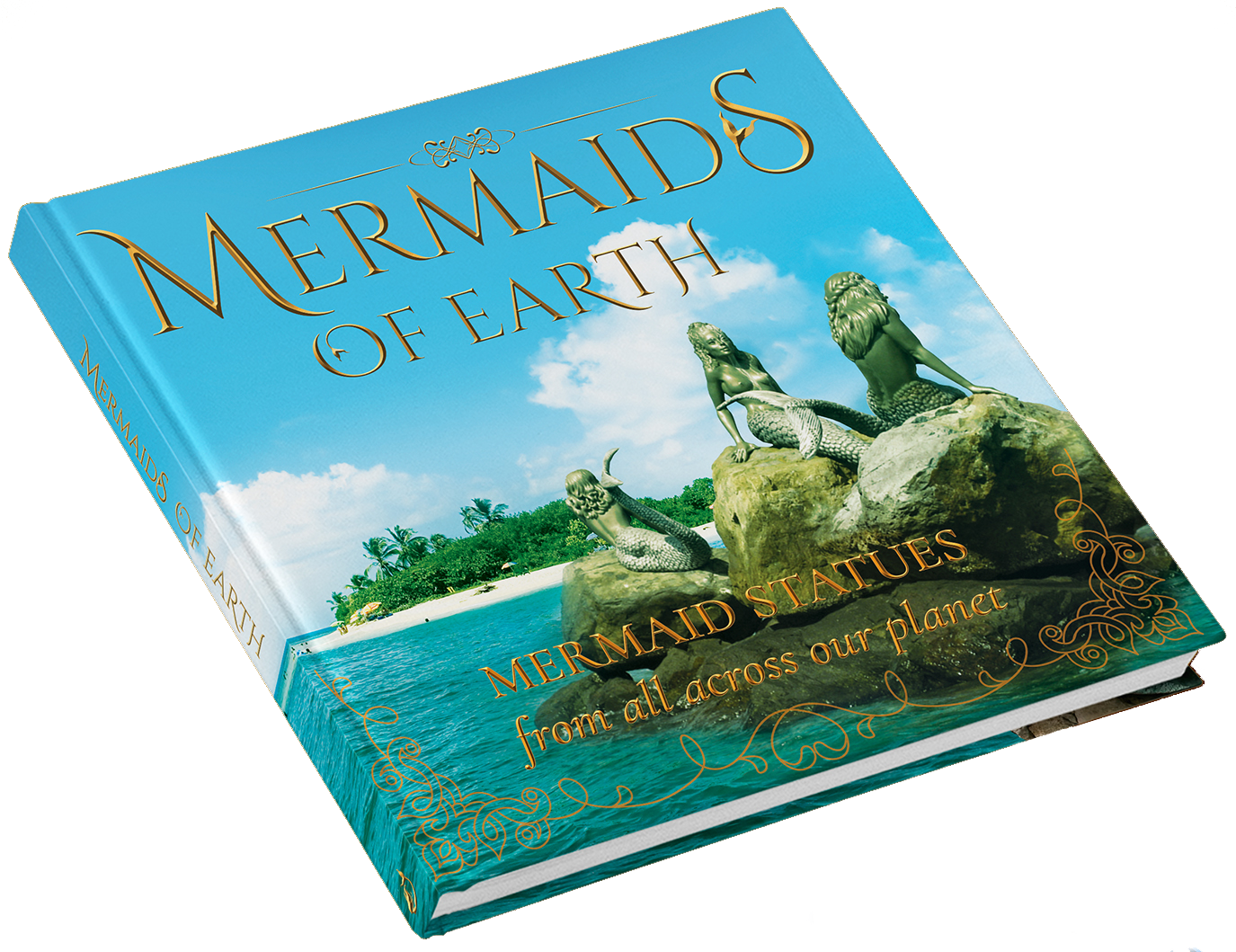
● The Mermaids of Earth coffee-table book: See page 34 in the book about these sculptures.