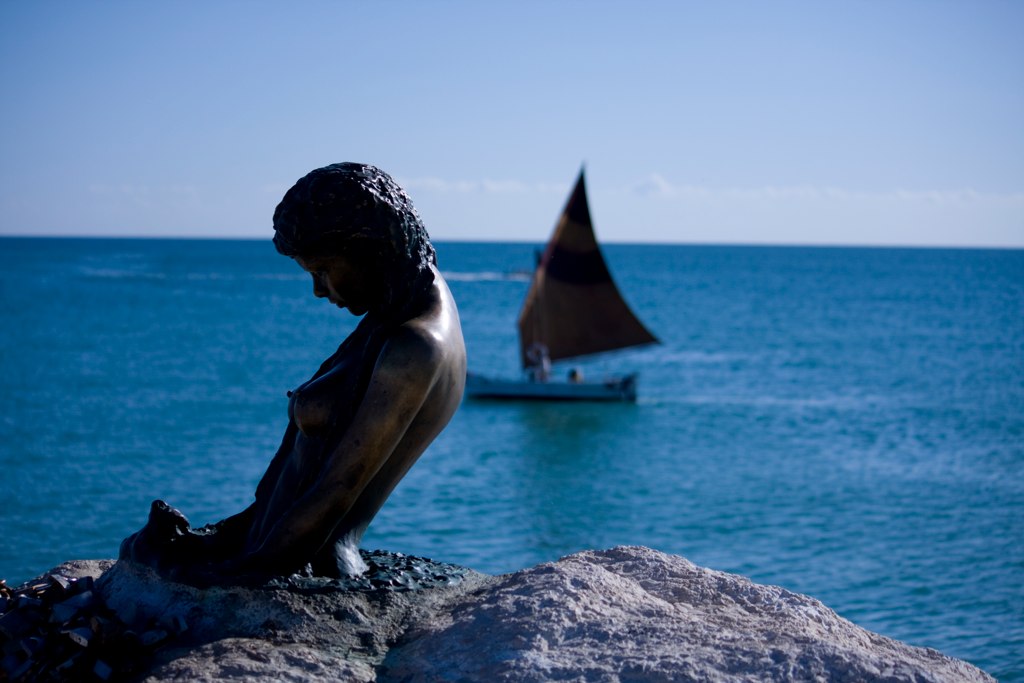
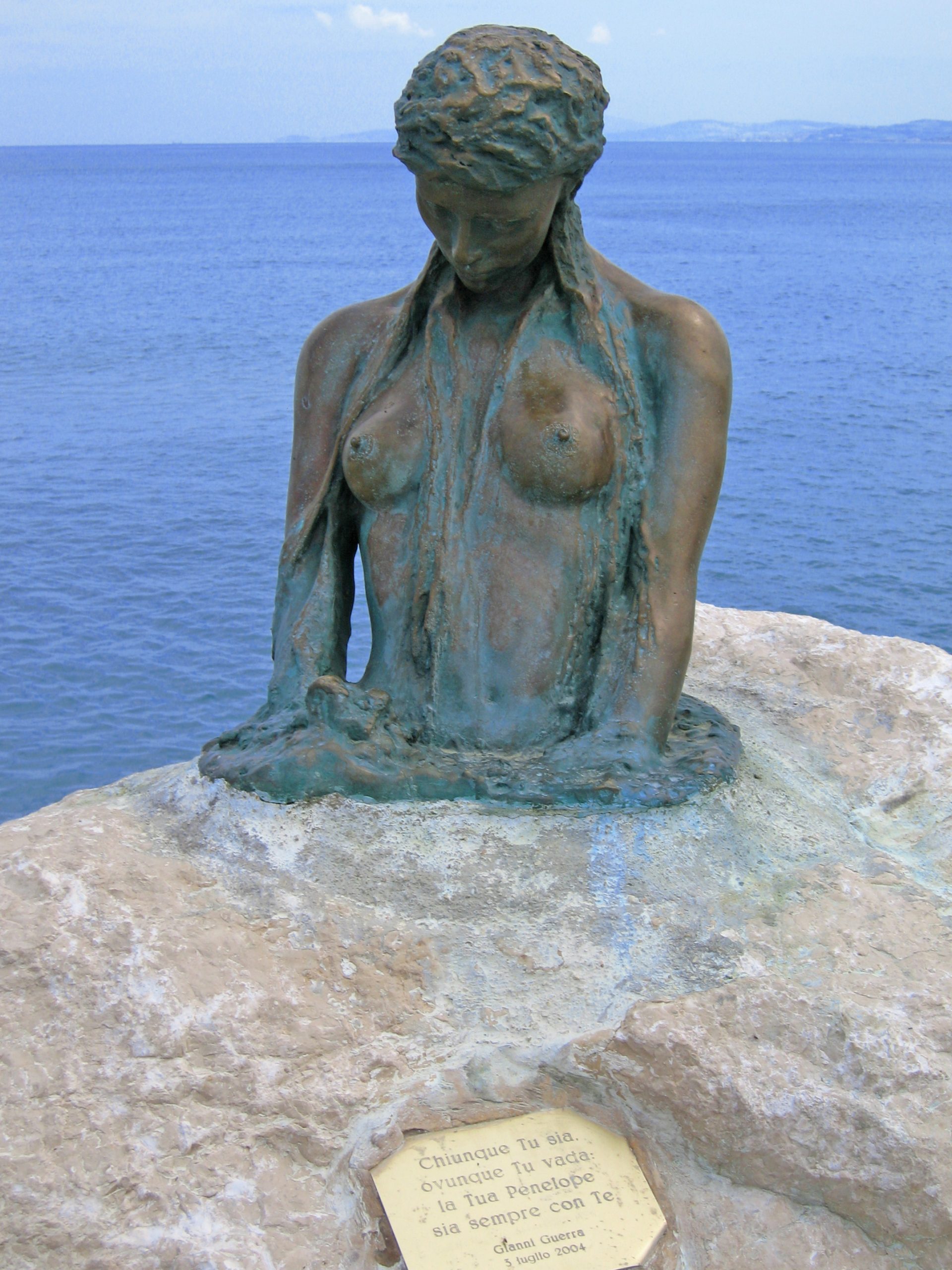
The small city of Senigallia on the north-east coast of Italy has its own 'little mermaid' statue. She is found at the end of the pier at Porto di Levante, Senigallia's harbor. map
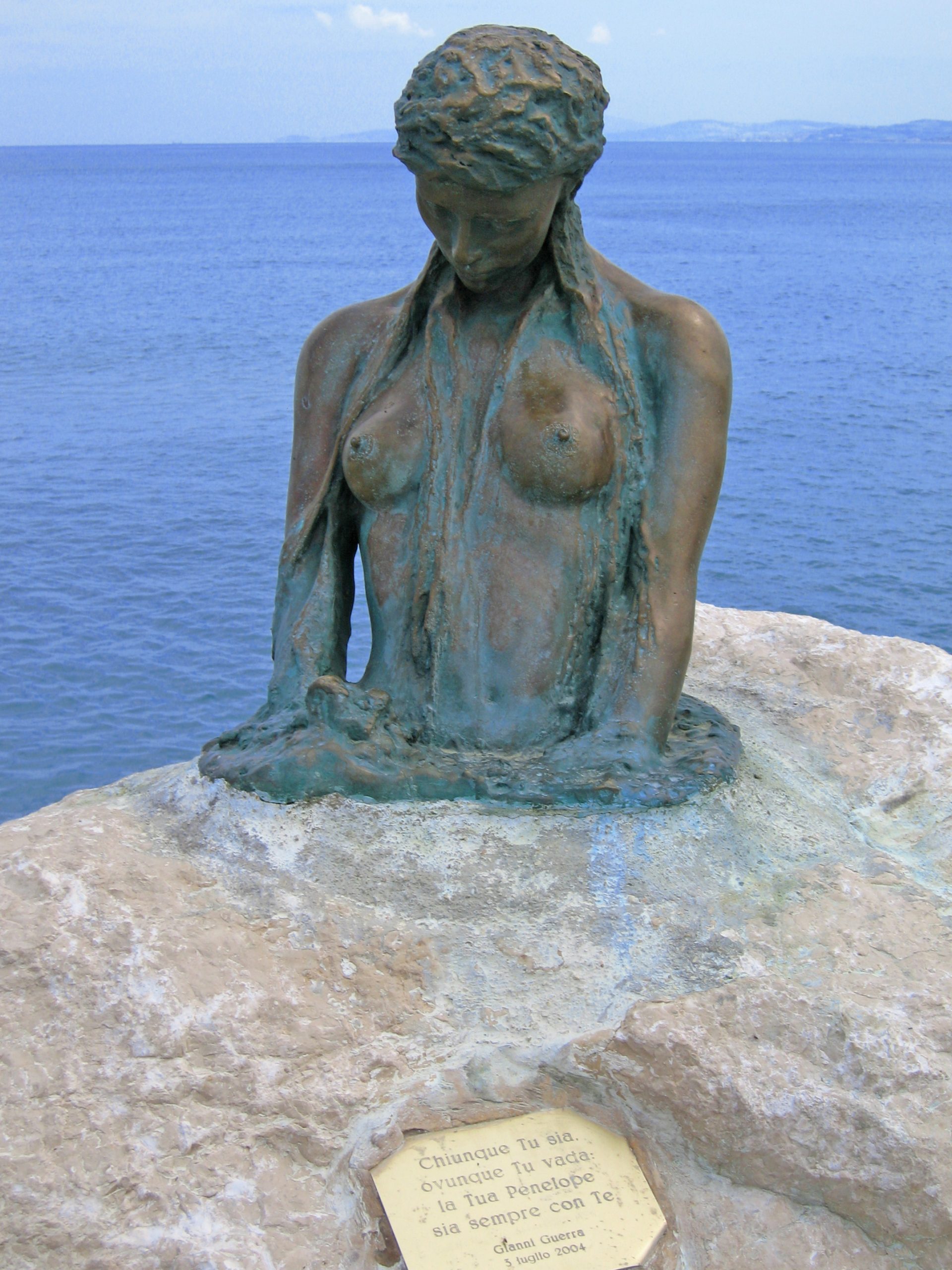
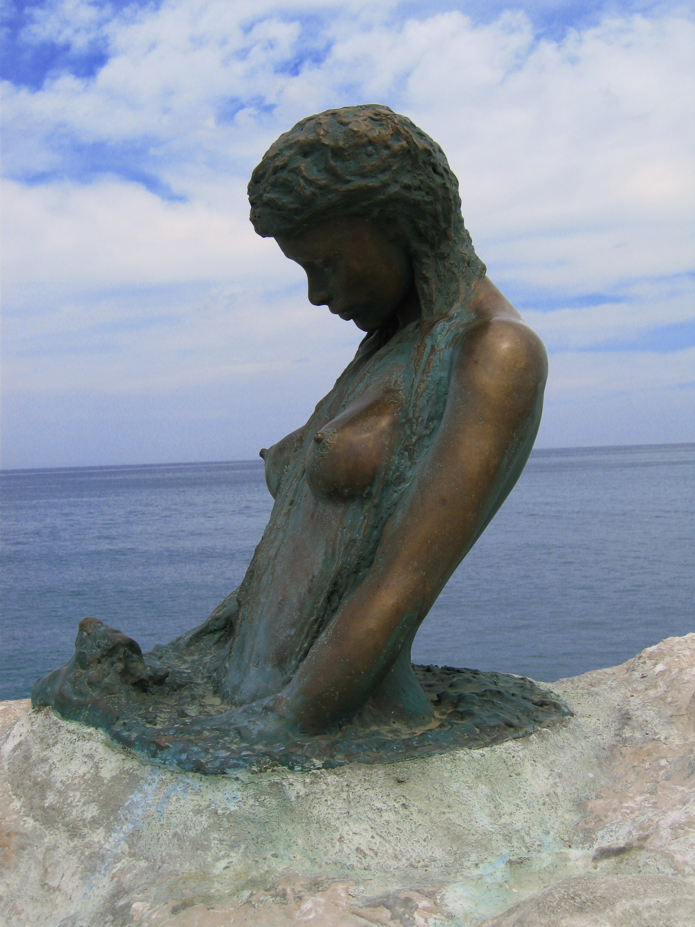
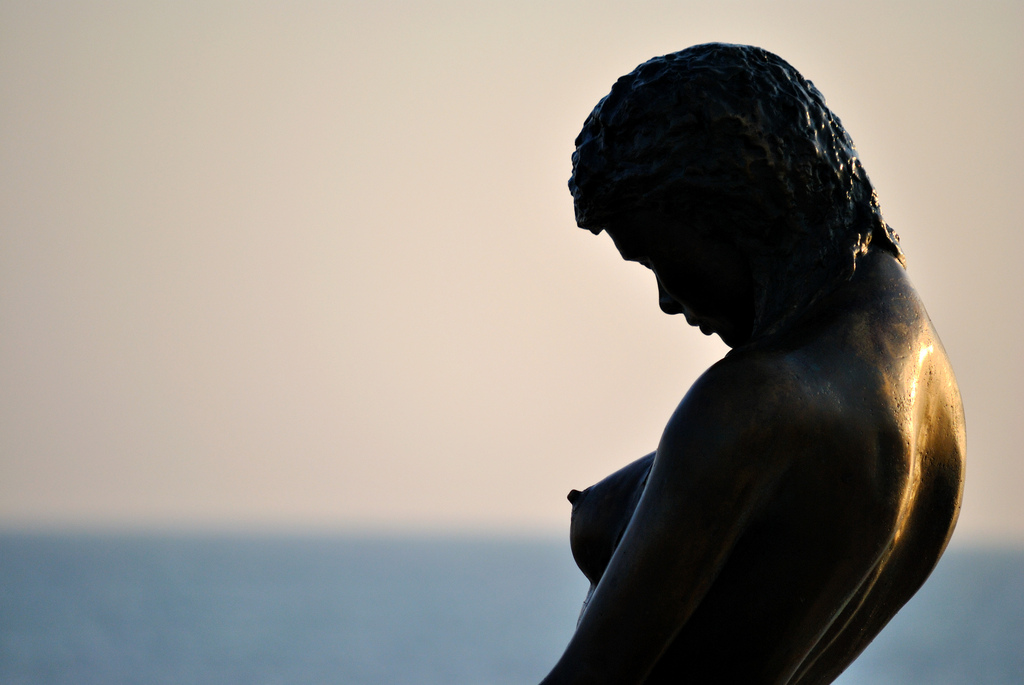
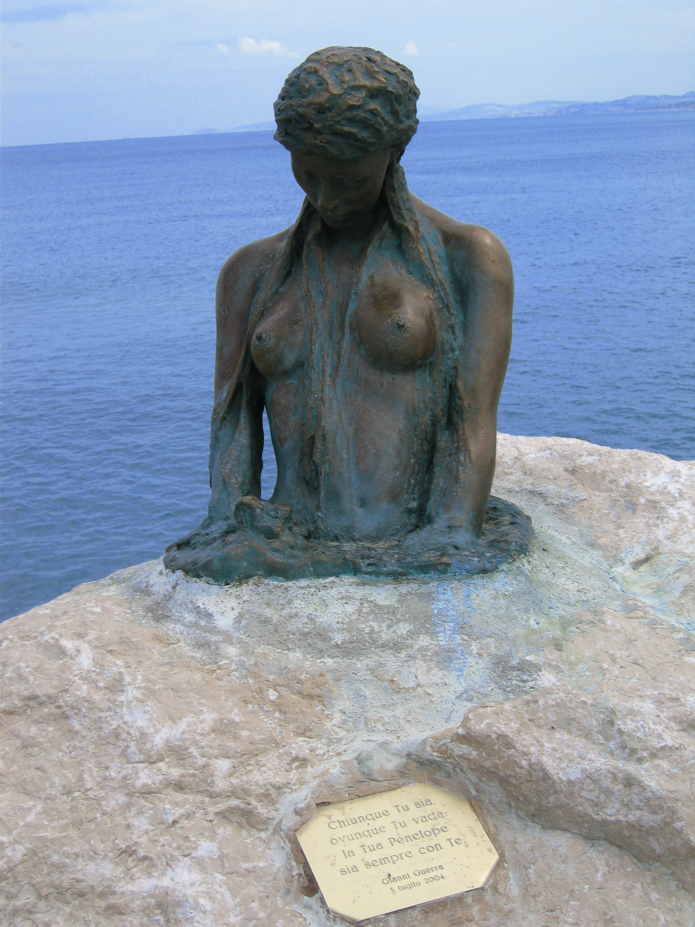
The statue is known as Penelope of Senigallia, but is also popularly referred to as 'The Little Mermaid of Senigallia'. She is often compared to Copenhagen's famous mermaid statue by Edvard Eriksen, representing The Little Mermaid in Hans Christian Andersen's fairy tale.
Although Penelope is not really a mermaid, one could easily be forgiven for assuming that she is, apparently emerging from water at the end of the pier.
Just as The Little Mermaid is a symbol of Denmark and Copenhagen, Penelope has become a symbol of Senigallia. The statue was created by Gianni Guerra and was inaugurated as his gift to the city on July 3, 2004. She represents Penelope (wife of Homer's Odysseus), who longs for and waits for her husband's return for 20 years. By extension, the statue represents all women longing and waiting for their lover's return.
How she came to be
Guerra has described the moment the idea arrived. He and his wife Elly were standing at the far end of the eastern mole one night when a small boat motored out of the harbour with a man aboard — "perhaps two" — and disappeared into the dark. They found themselves asking the same questions: where was he going, when would he return, and who was waiting for him? From that came the decision to give Senigallia its own image of the woman who waits. The bronze was cast in 1995 and, according to the travel magazine Vaghis, spent its early years in a rose garden in Val di Fassa before Guerra donated it to the city.
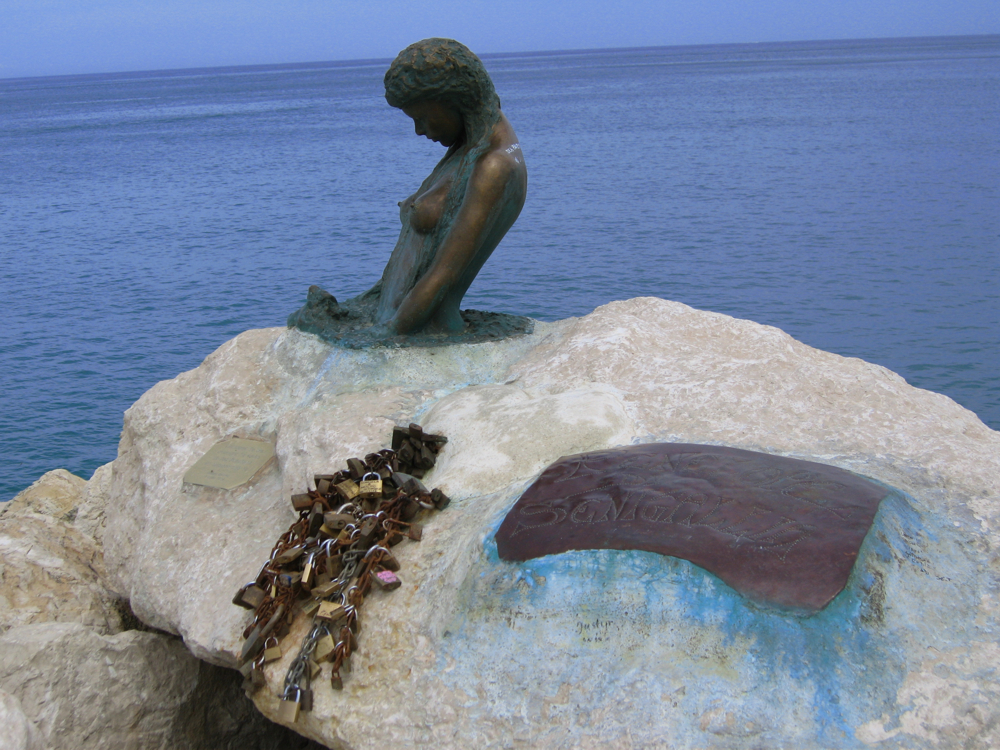
The inscription by the statue reads:
Chiunque Tu sia
ovunque Tu vada
la Tua Penelope
sia sempre con Te
Gianni Guerra
3 luglio 2004Whoever you are
wherever you go
your Penelope
is always with you
Gianni Guerra
3 July 2004
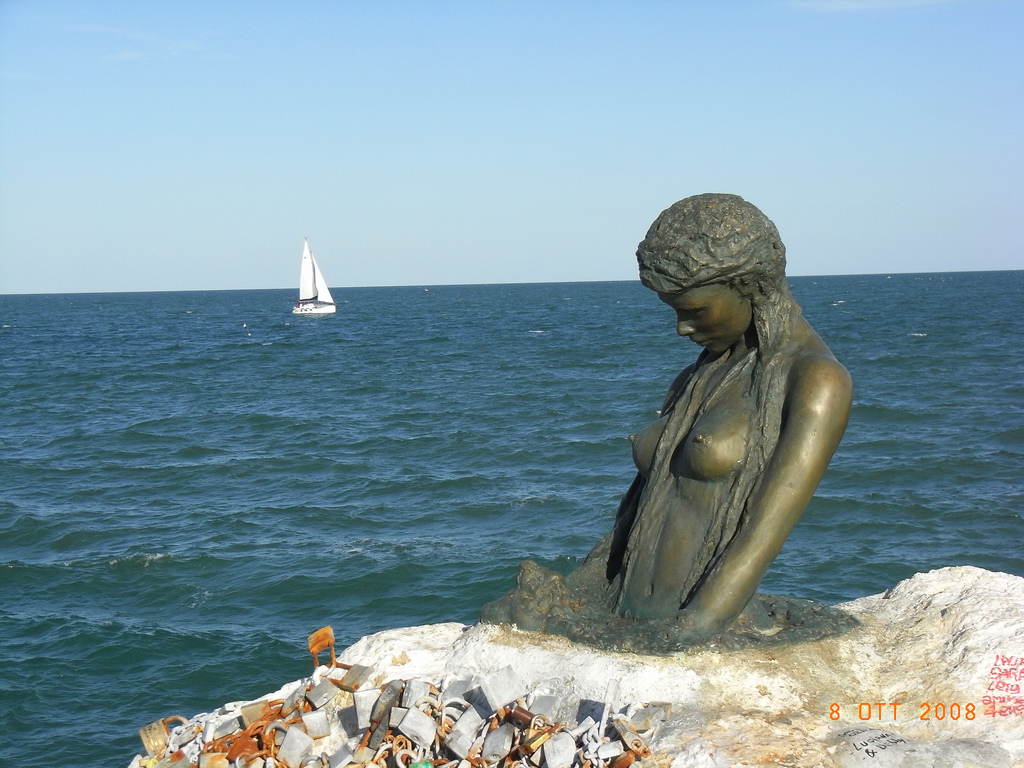
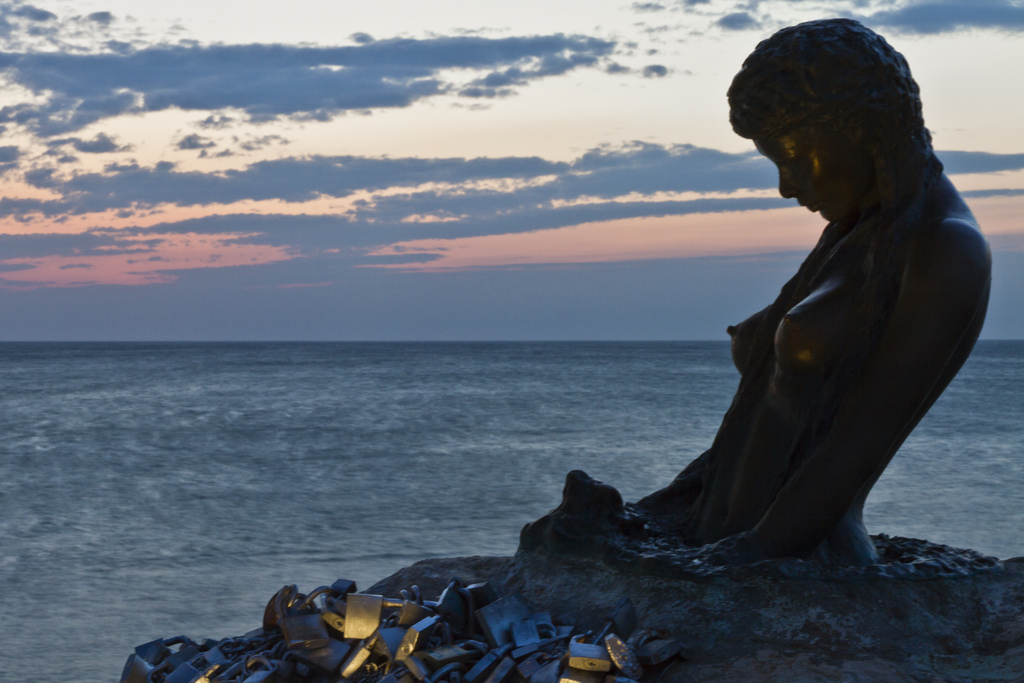
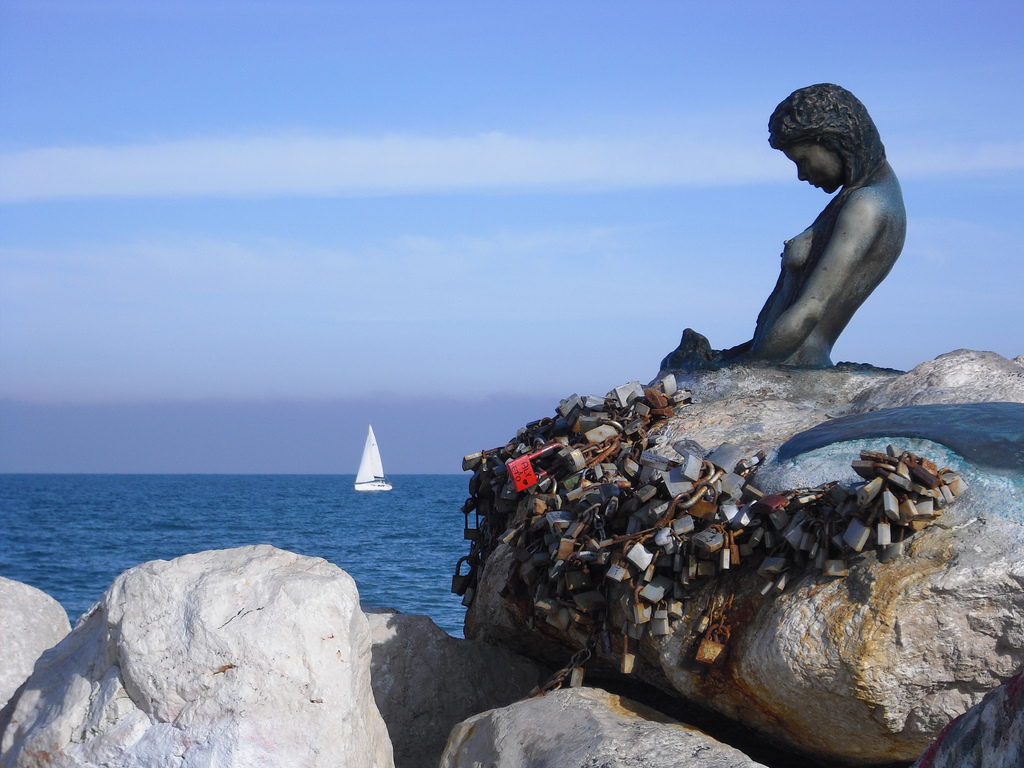
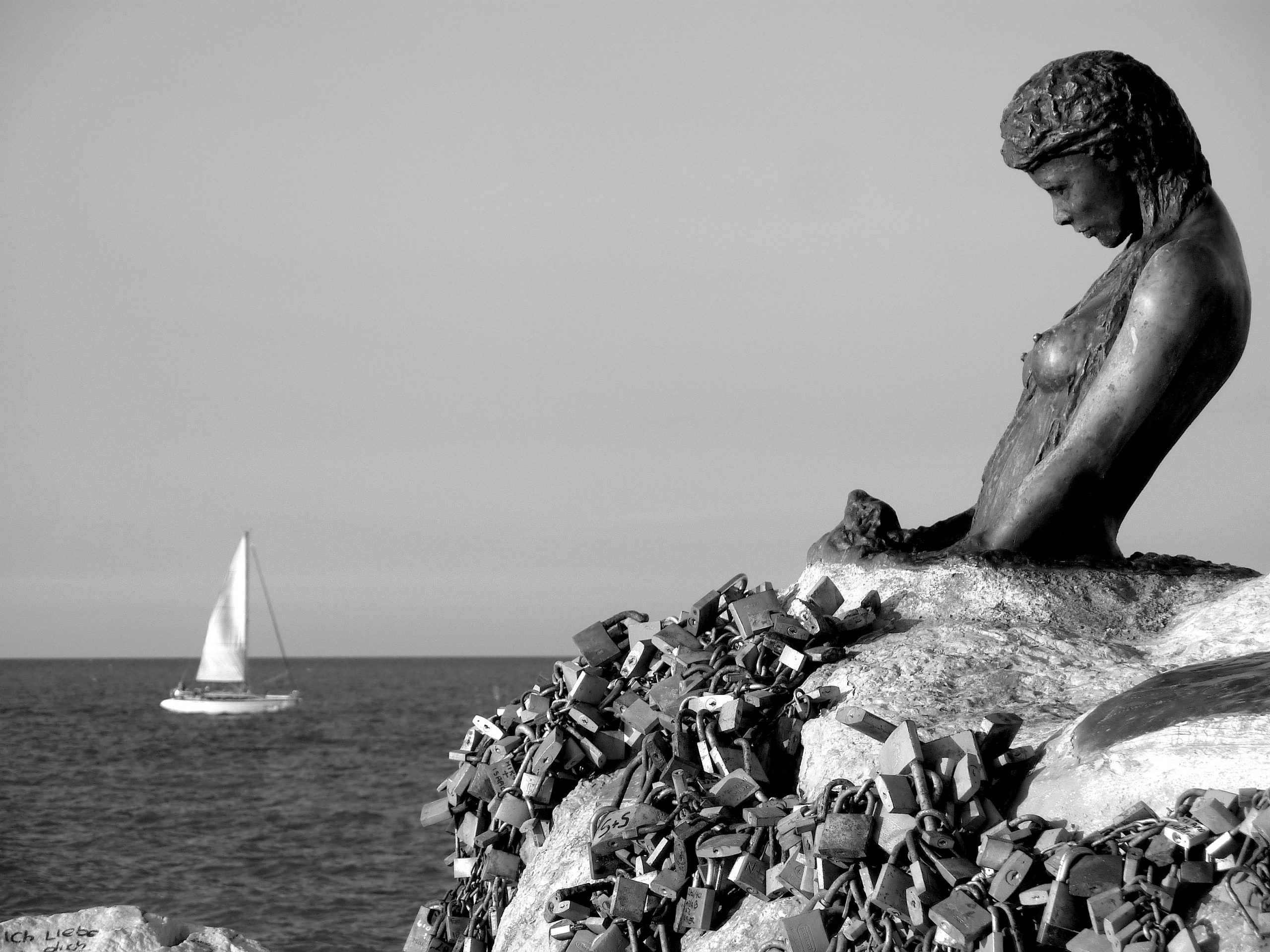
As a symbol of undying love, the pier with the statue of Penelope is a very popular spot for weddings. Also, there are numerous chains with padlocks around Penelope, fastened here by couples in love - some of whom surely will come back here for their weddings.
The first padlock was fastened by the Guerras themselves, who threw the keys into the harbour. Not everyone in Senigallia welcomes the accumulation — the locks are periodically debated locally — but they continue to appear.
About the sculptor
Gianni Guerra was born in Viterbo, c. 1940, into a family of craftsmen: his father Gino was an artisan, an uncle was a set designer and another a sculptor. He worked as a typographer, electrician, goldsmith, painter and photographer before opening a costume-jewellery business in Senigallia in 1967, first in via Mastai and later in Piazza Roma, which he ran until retiring in 2000. In 2018 he reopened a workshop, la bottega di Ulisse, in via Amendola. He describes himself as an artisan rather than an artist, and has maintained Penelope at his own expense.
Visiting
Penelope emerges out of the stone at the far tip of the Molo di Levante, the eastern breakwater of Senigallia harbor, in the province of Ancona. Access is free and unrestricted; it is roughly a fifteen-minute walk from Senigallia railway station on the Bologna–Lecce line. The end of the mole is fully exposed in rough weather.
References:
● http://en.wikipedia.org/wiki/Penelope
● The Little Mermaid (Copenhagen, Denmark)
● The Mermaids of Earth coffee-table book: See page 72 in the book about this sculpture.