I often am asked where the idea of mermaids came from, who came up with the idea, and whether they might exist or have existed at some point. After all, the concept of mermaids is so prevalent in human cultures all over the world — it is a fair question, and I devoted a chapter to it in the Mermaids of Earth coffee-table book.
For thousands of years, civilizations separated by oceans and centuries have told remarkably similar stories of beings who were half human and half sea creature. From Assyria and Greece to Africa, Asia, and the Americas, mermaids have appeared in mythology, folklore, religion, sailor accounts, and sacred art — raising a fascinating question: why has humanity always imagined people of the sea?
The ocean has always invited wonder, fear, and imagination — and from that depths, mermaids were born.
The First Mermaid Myths
The first known mention in human history of a human figure with a fish tail is from about 5000 BC, where Babylonian mythology of the god Ea described him as having the body of both a man and a fish. Ea was later known by the Greeks as Oannes, and by some Semitic tribes as Dagon.
But clearly Ea/Oannes was not a mermaid. Although these early fish-human deities likely helped shape humanity's earliest concepts of aquatic humanoid beings, the tradition of the mermaid as we recognise it begins elsewhere.
Over time, these early fish-human deities evolved from symbolic sacred figures into beings more recognizable as mermaids. The clearest early example appears in ancient Assyria through the goddess Atargatis.
From the earliest civilizations, the sea was seen as sacred, and its mysteries were given human form.
Atargatis: The First Mermaid Goddess

Jordan Archaeological Museum
The first appearance of mermaids in human culture seems to have occurred about 1000 BC in Assyria (roughly equivalent to present-day Syria plus the northern area of Iraq). In the mythology of Assyria the beautiful fertility goddess Atargatis became a mermaid after casting herself into a lake.
The Assyrian mythology has several versions of events, but most include Atargatis falling in love with a mortal shepherd and having a daughter (the legendary Syrian Queen Semiramis) with him, after which she throws herself into a lake — from shame, or from grief at inadvertently killing her lover, who did not survive the divine lovemaking. Her beauty is such that she cannot die nor be fully transformed into a fish, and so she retains her feminine shape and beauty above the waist, while having a fish tail instead of legs. She is closely associated with the Syrian custom of not eating fish.
Atargatis becomes known to the Greeks as Aphrodite Derceto, with similar stories, and is incorporated into Greek mythology.
As empires rose and cultures met, the stories of sea deities flowed across the world like tides.
Get one story like this every Sunday — free.
One mermaid. Her myth, her maker, and where to find her.
Greek Expansion of Mermaid Mythology
Greek mythology dramatically expanded and refined the concept of mermaids, introducing sea nymphs, ocean gods, sirens, and fish-tailed beings that would deeply influence later Western depictions. Specifically, the Greek tradition added the Nereids, the Tritons, the Sirens and Thessalonike — sister of Alexander the Great.
Nereids, Triton and Mermaids
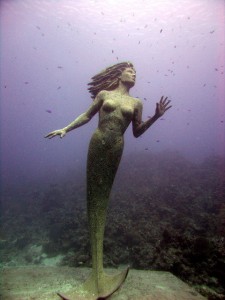
Cayman Islands
The Nereids were sea-nymphs portrayed at times with fish tails and at times with legs. There were 50 Nereids, all daughters of Nereus and Doris, inhabiting the Aegean Sea with their parents. A prominent Nereid was Thetis, mother of the great Homeric hero Achilles. Another was Amphitrite, who married Poseidon and bore Triton.
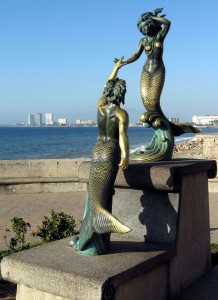
Puerto Vallarta, Mexico
Nereus, father of the Nereids, was one of the Titans — the oldest son of Pontus (the Sea) and Gaia (the Earth). He was considered the Old Man of the Sea, depicted as a human with a long fishlike tail. When the Titans were overthrown by Zeus and his siblings, Nereus was replaced as ruler of the seas by Poseidon.
Amphitrite and Poseidon were the parents of Triton — a merman who, like the Nereids, has the tail of a fish. Triton essentially inherited the kingdom of the sea from Poseidon, who had inherited it from Nereus. Children today will recognise Triton as the father of Ariel in the Disney film.
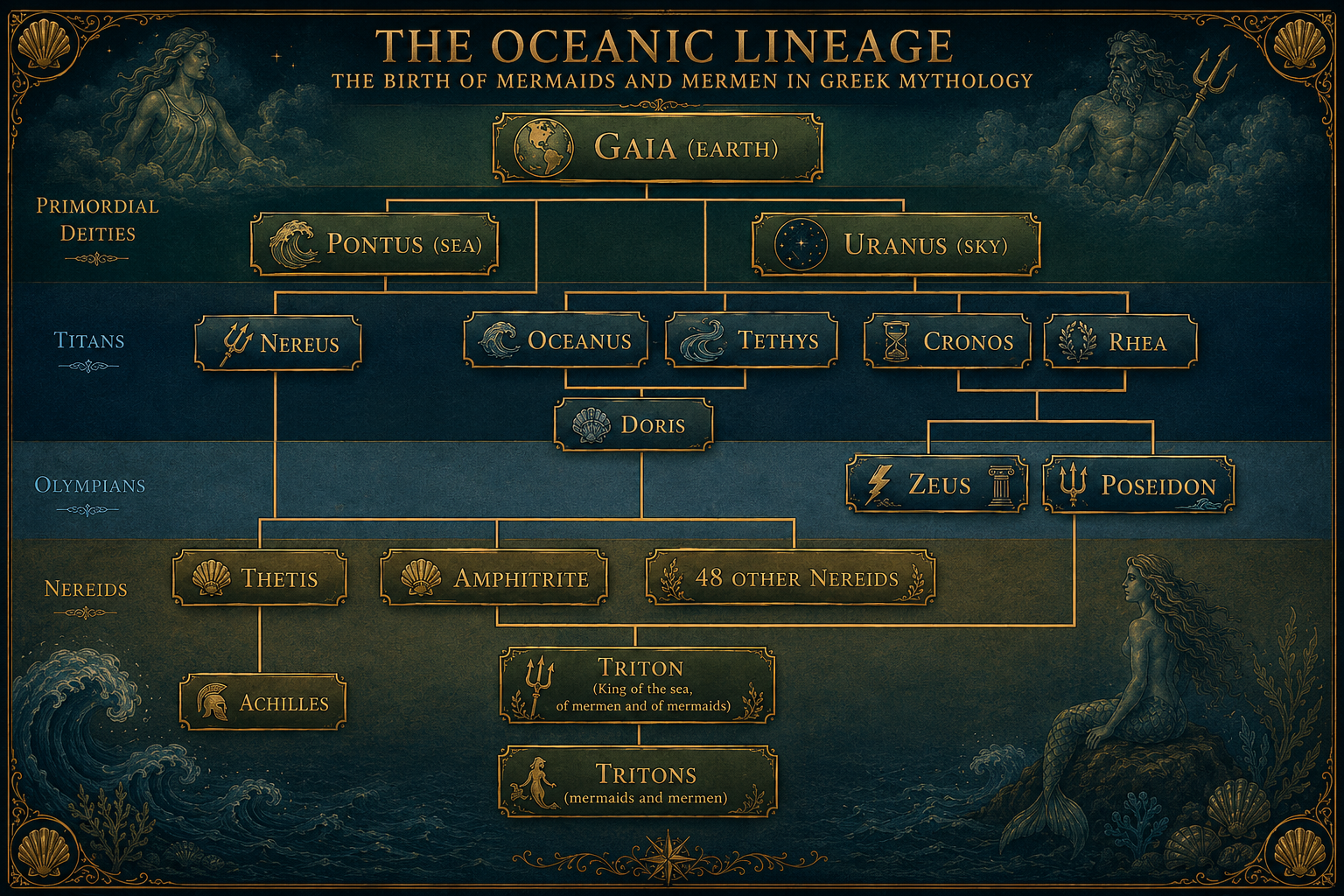
Greek mythology gave the sea its family — and with it, the first true mermaid legends.
Sirens
The mythology of Sirens is fairly confused. Originally, Sirens in Greek mythology were women with the lower body and wings of a bird — not fish-tailed women at all — who lured sailors to their death by singing with indescribably beautiful voices. They lost their feathers in a singing contest with the Muses, and being no longer able to fly they flung themselves into the ocean, where they either perished or transformed into mermaids, depending on which legend you read.
The Romans adopted the Sirens as women with a fish tail, and that became the much preferred interpretation in later times. Over centuries — particularly during the medieval and Renaissance eras — European art gradually merged sirens with mermaid imagery, creating the seductive sea-woman archetype familiar today. In many languages, "siren" is now synonymous with mermaid: Sirena (Spanish, Italian, Filipino), Sirène (French), Syrena (Polish), Sirenă (Romanian), Sereia (Portuguese).
Legends evolve, merge, and transform — but their power to captivate never fades.
Thessalonike
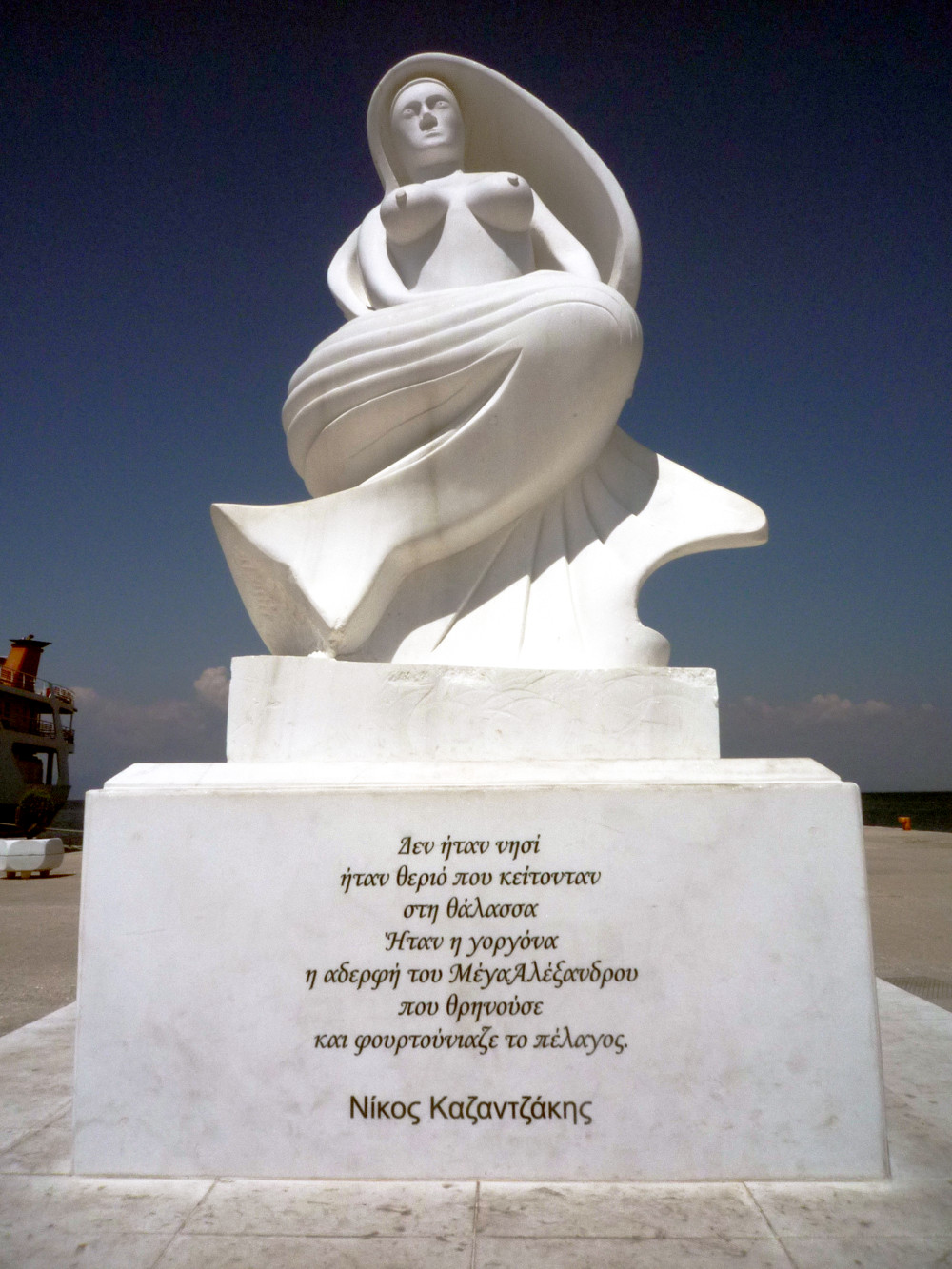
A completely separate legend is that of Thessalonike, sister of Alexander the Great. She was immortalised when Alexander recovered a flask of water from the Fountain of Immortality and washed her hair with the immortal liquid.
When Alexander died, Thessalonike was grief-stricken and jumped into the sea to kill herself. Being immortal, she could not die and was transformed into a mermaid instead. She roamed the Aegean Sea for centuries, asking sailors whether Alexander still lived. Those who reassured her were allowed to pass; those who failed to do so were sent to the bottom of the sea.
It was not an island
It was a beast lying
on the sea
It was the Mermaid
The sister of Alexander the Great
Who mourned
and made the sea rough — Nikos Kazantzakis, inscribed on the base of the Thessalonike statue, Thasos
By the time Greek and later Roman mythology spread across the Mediterranean world, the foundations of the modern mermaid had begun to take shape.
The Evolution of Mermaid Mythology
Mermaid Myths & Legends Across World Cultures
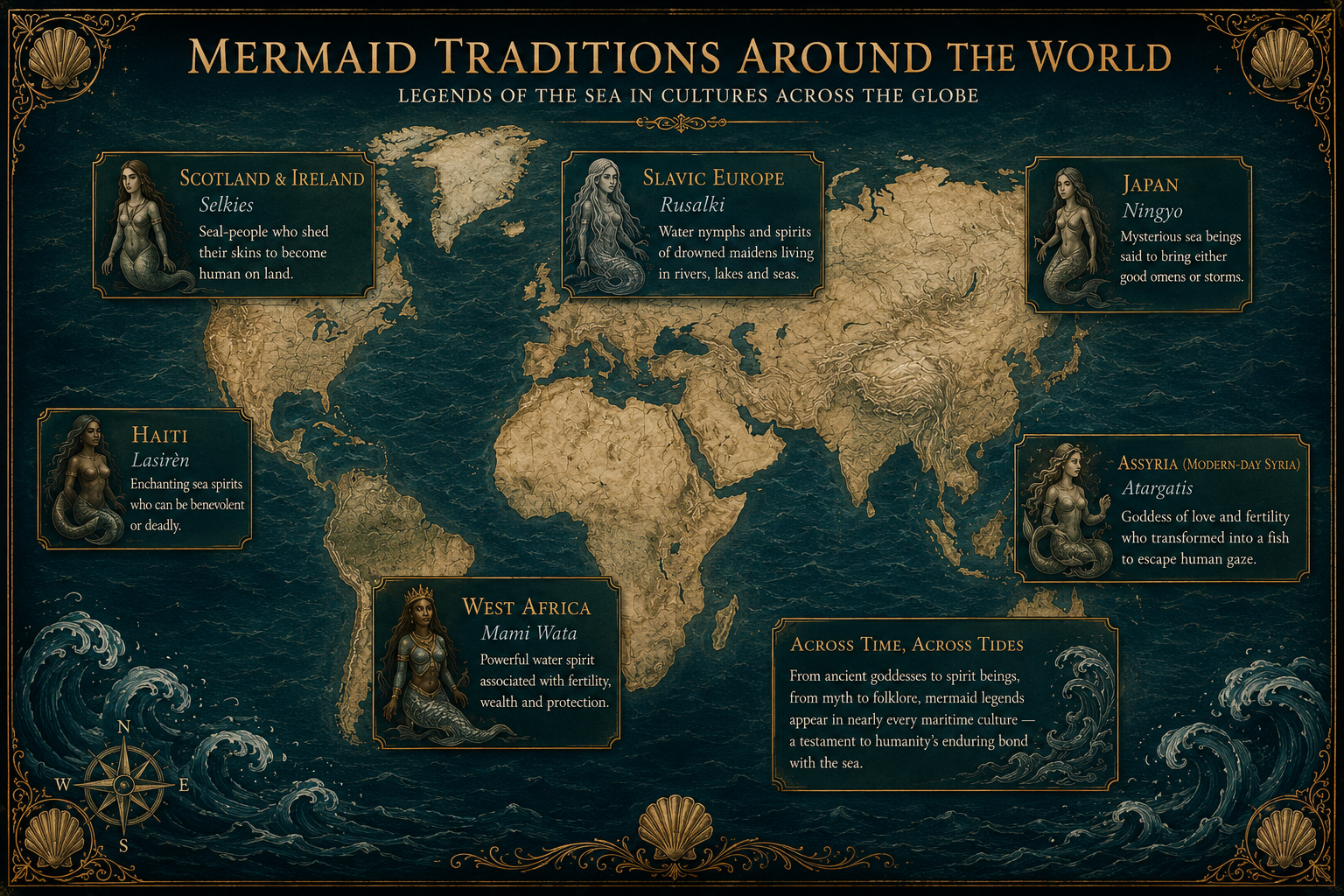
The most striking observation in studying mermaid mythology is not any single legend, but the pattern across all of them. Independently across every ocean-facing culture — separated by vast distances and with no apparent contact — humanity arrived at remarkably similar conclusions: that there are beings in the water who are part human, who are drawn to humans, and whose relationship with us is complex, unpredictable, and dangerous.
The British Isles & Northern Europe
Scottish mythology includes the Ceasg (maid of the wave), with the form of a woman above the waist and the tail of a salmon below. Ceasg can grant three wishes to those who capture them.
Both Ireland and Scotland have tales of the Merrow — human above the waist with a fish tail, webbed hands, and a red cap that enables them to breathe underwater. They are benevolent and at times inter-marry with humans. Scotland and the Faroe Islands have the Selkies — people who live as seals in the ocean, but can shed their seal skin and live as humans. They can be trapped on land if a lover hides their seal skin, and there are many tragic stories about such relationships.
Melusine
Mainland Europe has folklore about Melusine, a fresh-water mermaid sometimes with wings, sometimes with a snake tail, and sometimes with two tails — as in the Starbucks logo. She married a human, but transformed into a mermaid each week during her bath. When her husband broke his promise never to disturb her bathing, she left him forever.
The City of Luxembourg holds that Count Siegfried of the Ardennes, who founded Luxembourg in 963, married Melusina — who disappeared after he broke the same promise. A separate legend has Melusine marrying Prince Raymondin of Poitou, forming the royal house of Lusignan. This is almost certainly the origin of illustrations showing a crowned mermaid — and thus the original for the Starbucks mermaid.
Undine

German legends include Undine, a fresh-water sprite who is immortal yet has no soul. She can obtain a soul by marrying a human and bearing him a child. The famous story of Undine by Friedrich de la Motte Fouqué (1811) tells that Undine is born a mermaid but exchanged as a child for a human child by a river god. She marries a human, obtains a soul — but when her husband rejects her and takes a human wife, she is honour-bound to kill him despite her love.
The Little Mermaid
The Melusine legend inspired Undine, and Undine inspired The Little Mermaid written by Hans Christian Andersen in 1836. This is the story of the little mermaid who falls in love with a human prince and gives up her voice and tail to become human and to obtain a soul. In the Disney version she marries the prince and lives happily ever after — but in the original story the prince marries another, and the little mermaid dissolves into sea foam. You will just have to read the original story, which inspired the world-famous Little Mermaid Statue in Copenhagen.
Eastern Europe, Asia & Beyond
The Russian Rusalkas are the ghosts of women who died tragically — seductive and dangerous, pulling young men into rivers, with perpetually wet hair and a comb that conjures water on land.
China has tales of mermaids with webbed feet and hands. Cambodia and Thailand have well-known legends of the golden mermaid Suvannamaccha, a mermaid princess who falls in love with a human hero. The African Mami Wata is a water spirit shown as a mermaid — a healer and bringer of prosperity. The Caribbean has Aycayia and La Sirene. The Miengu of Cameroon are beautiful mermaid-like figures with gap-toothed smiles who bring good fortune.
In Brazil, Iara — Lady of the Lake — is an immortal freshwater nymph with green hair who lures men to live out their lives with her under the water. In the Philippines, Sirena and Siyokoy are human above the waist with fish tails — can drown sailors or rescue them. On Java, the mermaid queen Nyi Roro Kidul is Queen of the South Sea, controlling the Indian Ocean's waves and tsunamis — aqua green is sacred in her honour.
Separated by oceans and centuries, people everywhere imagined beings of the sea. The message is universal; only the names change.
Geomundo Island, South Korea
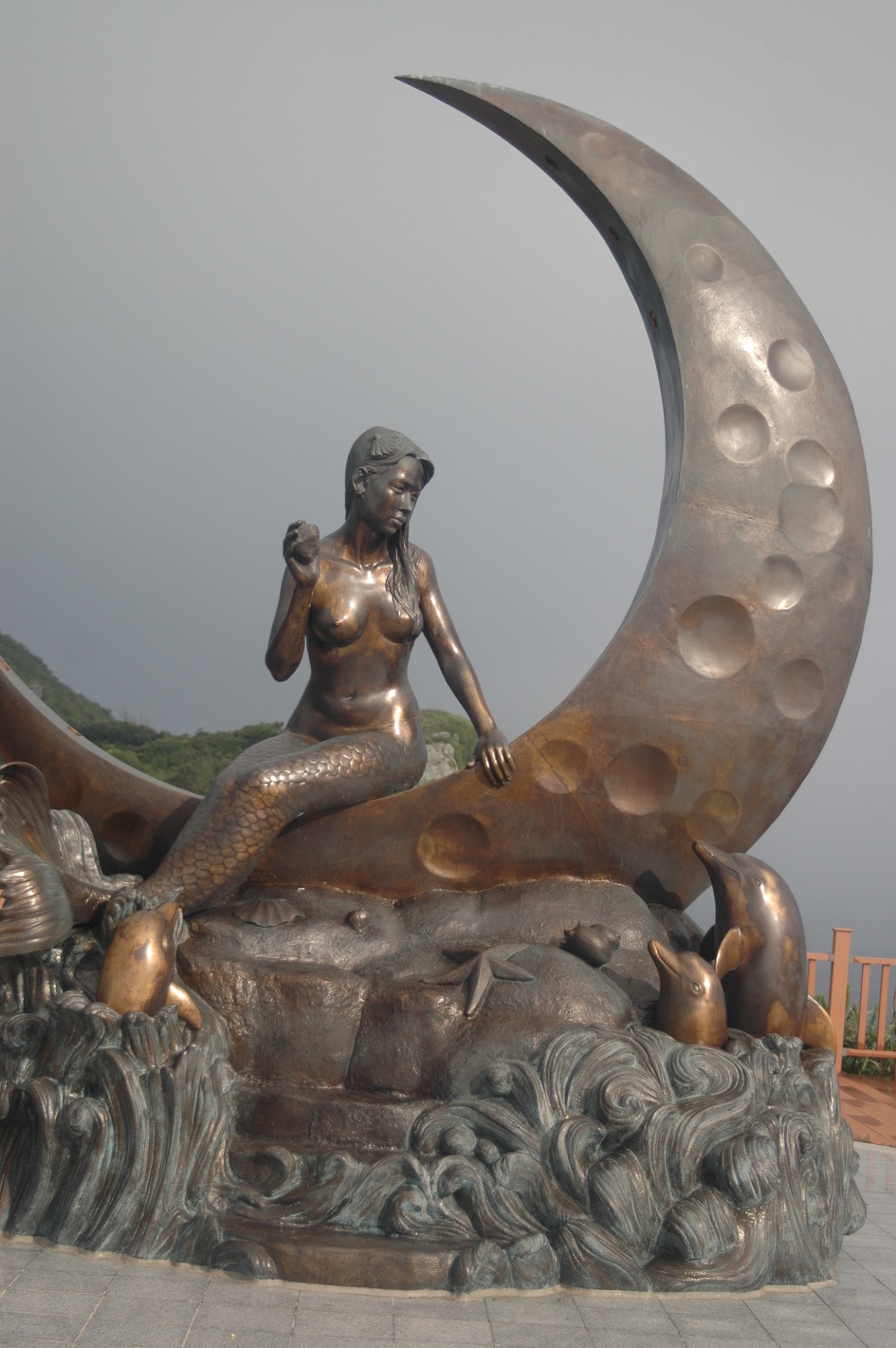
On Geomundo Island in South Korea, Sinjiki warns fishermen of approaching storms by throwing rocks at cliffs. In Napier, New Zealand, Pania of the Reef is the central character in a Māori legend — a sea-maiden who marries a tribal chief's son and divides her life between the sea and land, until he tries to make her permanently human.
There are countless other similar local legends across the world, with many of the same story elements.
Mermaid Figures Across World Cultures
Mermaid Sightings
There is a theory that mermaid legends came about as a result of — presumably very drunk and very lonely — sailors mistaking manatees or dugongs for attractive women with fish tails. While manatees can be very graceful in the water, they typically weigh over 1,000 pounds and their faces are not easy to mistake for a woman's face. Nonetheless, three species of manatees and the one dugong species form the animal order of Sirenia, so named in honour of this theory.
Perhaps "drunk and lonely sailor" is too harsh. Christopher Columbus reported seeing three mermaids — though "not as beautiful as they are represented." And the famous English pirate Blackbeard (Edward Teach) reported seeing mermaids.
Reality may explain the spark, but imagination gives the myth its eternal life.
The Aquatic Ape Theory
Another theory of mermaid — and human — origin is that fairly advanced primates living by wading in sea water and eating marine animals adapted to life in water by becoming largely hairless and bipedal. It has been suggested that some of these aquatic apes evolved into modern humans, while others evolved into mermaids. The Aquatic Ape Theory of human evolution is not widely accepted in the scientific community, and there does not appear to be any scientific evidence whatsoever for the theory of mermaid evolution — nor for the existence of mermaids at all.
Why Do Mermaid Legends Endure?
Mermaids have been part of human culture for thousands of years, with the most major influence from Greek and Roman mythology — but also from many other cultures across the globe, both before and after the Greeks and Romans.
Mermaids have been seen as forces for both good and evil from the start, and this tradition continues to this day — though the general tendency in current culture is to regard them as mostly benign, beautiful, attractive, and independent. They have also evolved into powerful symbols of ocean conservation and the sustainable care of marine ecology.
Whether divine, symbolic, or born from real encounters, mermaids endure because the sea itself remains mysterious.
So what is the origin of mermaids? Perhaps my granddaughter Siena has the plainest answer:
"Mermaids are just there, like elephants, and whales and dinosaurs." — Siena